

Written by Christopher Melotti
We’re seen everything with content marketing – and we’re going to share the latest insights into AEO, GEO, SEO and Human reader optimisation .
At Melotti Content Media, we absolutely live and breathe marketing content! Marketing Strategy. Brand Messaging. Copywriting. SEO & AEO optimisation. Websites. Blogs. Thought leadership. Marketing Campaigns.
And one of the first things we explain to every client is this: your marketing content NO LONGER has just one audience.
Today, every piece of written content has 3 different readers, all consuming the same words, but all looking for very different things; and all matter.
They are:
- The human (Eg: you and me!)
- The search engine (Eg: Google, Bing, etc).
- The AI engine (Eg: ChatGPT, Perplexity, etc).
Understanding how each one reads, interprets and assesses your content is the difference between content that simply exists and content that actually performs.
In this article, we break down how each content marketing audience behaves, what they care about and how to optimise the experience for all three without compromising quality or credibility.
1. The Human Reader

Who? Your customer, prospect or decision-maker
The human reader is still your most important audience. They’re the reason your content exists in the first place.
But humans today read very differently than they did even a few years ago.
Your human content reader tends to:
- Have very short attention spans
- Scan before they commit to deeper reading
- Look for topic relevance fast
- Want nuance, originality and deep insight
- Tune out generic or AI-sounding writing immediately
Humans are not reading to admire your frequency or keyword density. They are reading to answer a question, solve a problem or validate a decision.
They want:
- A clear point of view or fresh opinion
- Language that sounds human, not manufactured
- Ideas they cannot get everywhere else
- Structure that makes skimming easy
- Confidence that the author knows what they are talking about
“Remember, their time and attention are extremely valuable to both them and you!” - Christopher Melotti
How Melotti Content Media optimises content marketing for today’s busy humans”
- Earn attention early: A strong introductory hook that respects their time and signals relevance immediately.
- Get to the point, then go deeper: Humans will stay when the early value is clear.
- Write like a person, not a system: Real voice, real specificity and a real opinion.
- Make it skimmable: Headings that mean something, short paragraphs and a good logical flow.
- Add proof and examples: Humans trust what feels grounded, not theoretical.
If the human reader loses interest, nothing else matters. So keep things engaging and original!
For more, see How Content Marketing works.
Interactive assets and embedded media are mostly for humans
Interactive tools like quizzes, downloadables and calculators can be brilliant for human engagement, but AI and Search Engines often cannot interact with them directly.
The smart move is:
- Use tools and interactive assets for humans
- But write about them clearly in the article so AI understands they exist and why they matter
Same goes for embedded video. Video can keep a human on the page, but AI typically prioritises the written content and can overlook the embed.
2. The Search Engine Reader

Who? Google, Bing and traditional SEO search engine systems.
Search engines (that list websites and references in response to a query) still play a major role in discoverability. But they don’t read like humans and they don’t interpret content emotionally.
Search engines assess marketing content’s query quality in a mathematical way which is very important to understand.
Search engines scan your marketing content to:
- Identify keywords, frequency and topical relevance
- Understand structure and hierarchy
- Detect intent alignment with search queries
- Assess authority signals and internal consistency
- Determine whether a page deserves to rank
Search engines don’t care if your writing is clever, fresh or enjoyable. They care if it’s clear, relevant and properly structured.
How we at Melotti Content Media optimise content for today’s search engines:
- Intent-led keyword strategy: Not keyword stuffing and not guessing. It’s about aligning language to real search queries.
- Clean on-page structure: Headings, metadata, internal linking and a logical hierarchy.
- Topical focus: A page should mean one thing clearly and not ten things vaguely.
- Helpful supporting content: Related pages, hyperlinks and articles that reinforce the topic and strengthen search query relevance.
- FAQs and structured sections: Not just for humans, but also for clearer indexing and retrieval.
SEO optimisation works best when it supports quality, topical content and not when it tries to replace it.
3. The AI Reader
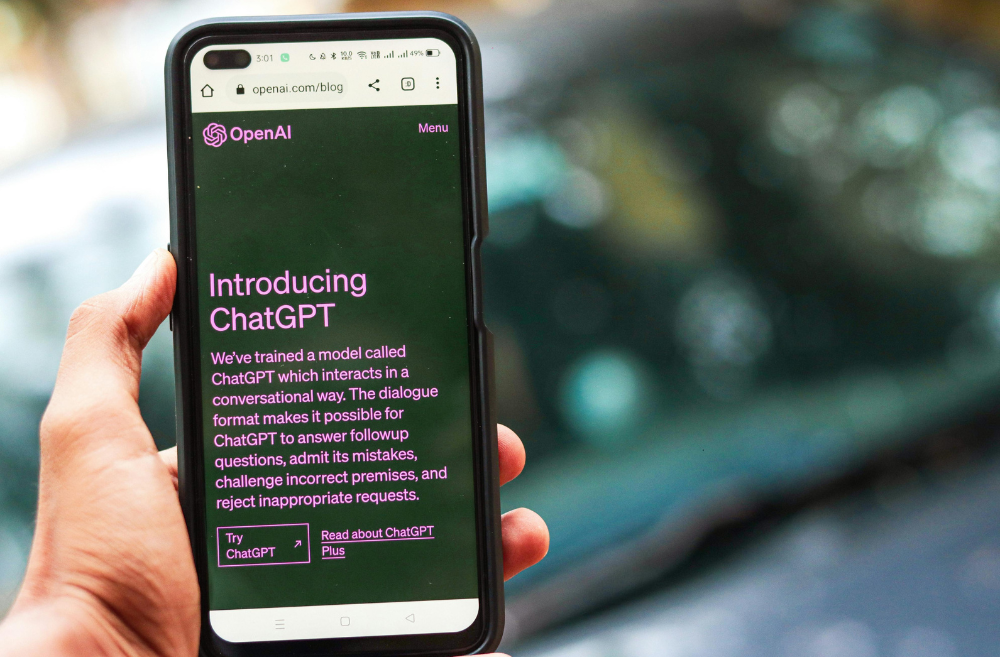
Who? ChatGPT, Gemini, Perplexity and other AI answer engines
AEO (AI Engine Optimisation) is where marketing content rules have changed dramatically.
AI engines don’t skim to read your content. They don’t get bored. They don’t bounce. They don’t “run out of time”. They read everything carefully from a language understanding standpoint.
The simplest way to understand AI behaviour is this:
AI is like a human reader but with an infinite attention span and the ability to compare your content to everything else on the internet in seconds.
That single point changes how content marketing needs to be written.
What the AI reader is actually doing
AI engines are assessing your content as a whole. Not just the intro. Not just headings. Not just the first 300 words.
They’re evaluating:
- Do you stay on topic from start to finish?
- Is the argument coherent and original or does it drift?
- Is the writing consistently strong or does it fade halfway through?
- Is the content spam or just part of a mass-SEO exercise?
- Are claims supported by proof or are they just assertions?
- Does this help a user understand something clearly, quickly and credibly?
- Is there enough substance here that it is worth referencing?
Here is one of the most important insights we’ve seen in practice:
If your writing drops in quality or focus halfway through, AI can stop trusting it. And when it stops trusting, it moves on.
Think of AI like a highly critical assessor. It is patient, but not forgiving. It’s not impressed by rubbish content; it’s trained to detect it.
With AEO, here’s why “consistent content quality” matters more than ever

With humans, you can sometimes get away with a strong opening and a weaker middle. People skim. They jump. They skip.
AI does NOT behave like that.
AI reads the full piece and forms an overall judgement. If your content starts sharp and then turns vague, repetitive, generic or assumption-heavy, AI notices.
This is one of the biggest problems we see when content is:
- Written too quickly
- Generated by AI and uploaded
- Built from generic lists and templates
- Driven by “SEO word count” instead of real clarity
AEO/GEO: speed to substance wins
A common weakness across modern marketing content is the intro that takes too long to say anything.
For AI, this is a bit of a deal breaker.
AI wants:
- The point early
- The theme clear
- The topic locked in
- The argument progressing quickly
If your first section circles the topic instead of landing a clear point, AI can effectively go: “This is wasting time. There will be a better source.”
Content structure needs to feel like an argument, not a waffling list

Many content articles look organised on the surface. They have headings. They have subheadings. They have bullet points.
But they still don’t perform because they do not progress in language.
A helpful mental model is our Melotti Content Media upside down triangle:
- Lead with the sharpest, clearest point
- Then expand with explanation and context
- Then reinforce with proof and examples
- Then answer the obvious questions a sceptical reader would ask next
Every section should land a point. Not just add words.
If the article feels like it jumps around or it reads like a collection of loosely related paragraphs, AI sees it as a clump of content, not a credible answer.
For more, see: Content is an upside-down triangle
AI looks for a “cloud of evidence”

AI doesn’t just reward a confident claim. It rewards a backed claim.
In practise, AI tends to favour content that includes:
- Real examples
- Case study style proof points
- Specifics over generalities
- Credible supporting references
- Hyperlinks that validate what you are saying
The pattern we see is simple:
The more you prove, the more likely you are to be referenced by AI platforms
That doesn’t mean every paragraph needs citations. It means your writing should not be built on empty assertions.
FAQs and question-led chunks are AI-friendly

AI loves content marketing that anticipates real questions and answers them clearly.
This doesn’t mean every blog must end with a formal FAQ section, but question-led chunks throughout the piece are powerful, for example:
- “What does this mean for [audience]?”
- “How do you know if this is working?”
- “What is the most common mistake people make here?”
- “What should you do first?”
A practical approach is to bulk content with useful Q&A style sections, rather than padding it with long paragraphs.
What about content length? Content marketing depth helps, but only if it’s useful

So how do you optimise content marketing for all three audiences? Longer content often performs better in AI results, but not because it’s long. It performs better because it contains:
- More useful explanations
- More context
- More examples
- More answers
Content marketing length that is simply repetitive does NOT help. It can hurt. The goal is not a word count. The goal is substance.
This is where many teams get stuck.
They either:
- Write purely for humans and ignore digital discoverability
- Write purely for SEO and create bloated, robotic pages
- Or rely on AI output and hope it magically performs
The best content marketing approach that we at Melotti Content Media recommend is to treat your marketing content as a holistic system and not a one-off output. We conduct a 5-step Human/AEO/SEO content marketing optimisation loop that you can read here.
We hope you feel far more equipped and ready to get out there and build that irresistible brand presence through content marketing!
And remember, if you need any help or further guidance, the Melotti team are here for you!

How can Melotti Content Media help with your content marketing?
To stand out in today’s crowded business environment, increase conversions and boost your revenue, you need high-quality content marketing backed by expert Australian copywriting and experienced marketing strategy.
However, this is easier said than done. You’re time-poor and spread thin, and content marketing may not be your expertise.
As your Australian Copywriters, Message Marketers and Brand Strategists, we can strategise, produce and execute your content marketing plan on your behalf, while you focus on what matters to you – growing your Australian business.
Let’s start earning the results your business deserves!
To speak to your trusted message marketers and Australian copywriters, contact our team at Melotti Content Media today: